
Introduction
Kansas recorded over 56,000 traffic crashes in 2024 according to the Kansas Department of Transportation, resulting in approximately 24,000 injuries and 410 fatalities statewide. That is roughly one crash every nine minutes across the state. Moreover, the moments immediately after a collision determine whether you are legally protected, financially covered, and physically safe. At McCarthy Hyundai of Lawrence, we want every driver in the Lawrence area to know exactly what to do after a car accident in Kansas before that moment arrives. Therefore, this guide walks through every step, including the Kansas-specific legal requirements that differ from generic national advice. After an accident, our certified service team is also here to restore your vehicle correctly. Schedule your repair appointment online or find our Lawrence location.
Quick Summary
After a car accident in Kansas, check for injuries first, call 911 for any accident with visible damage or injuries, document the scene thoroughly, exchange required information without discussing fault, notify your insurer within 24 to 48 hours, and seek medical attention promptly even if you feel fine. Furthermore, Kansas is a no-fault PIP state, has a mandatory reporting threshold of $1,000 in property damage, and gives you two years to file a personal injury lawsuit.
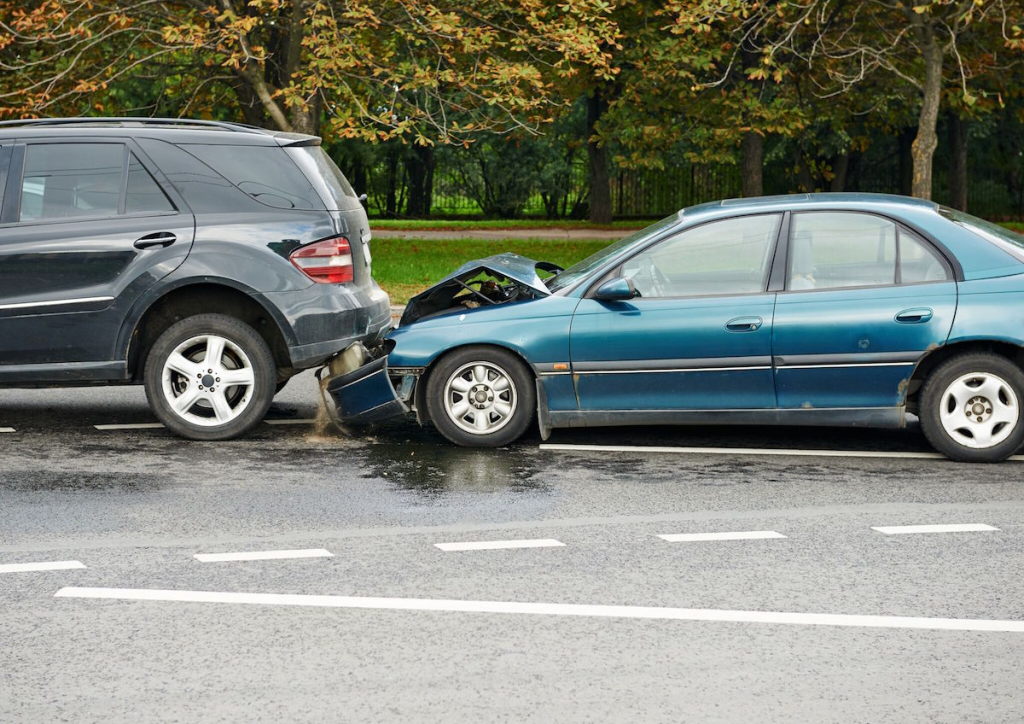
Before the Accident: What to Keep in Your Vehicle
The best time to prepare for what to do after a car accident in Kansas is before one happens. Keep the following in your glove box at all times. First, your current insurance card or confirmed digital version in your insurance app. Second, your vehicle registration. Third, a simple notepad and pen for capturing information. Furthermore, a basic emergency kit with road flares or reflective triangles, a flashlight, and a first aid kit is worth having on hand. Moreover, if you drive a Hyundai, make sure your Bluelink emergency services are active. Many current Hyundai models include Automatic Emergency Response, which can detect a collision and automatically contact emergency services with your vehicle’s GPS location even if you cannot make the call yourself. Check your Bluelink status in the MyHyundai app before you need it. Visit our service center if you need help verifying your vehicle’s emergency features.
Step 1: Check Yourself for Injuries After a Car Accident in Kansas
In the immediate aftermath of a collision, adrenaline is a powerful masking agent. Injuries that will be painful hours later can feel completely absent in the minutes right after impact. Therefore, resist the instinct to jump out of the car. Take a breath first. Do a mental scan of your body. Are you in pain anywhere? Is there any numbness or dizziness? If you are seriously injured, do not move unless you are in immediate danger from fire or another threat. Call 911 or ask someone nearby to do so. According to the National Highway Traffic Safety Administration, unnecessary movement after a serious crash can worsen spinal or internal injuries that are not immediately apparent. If you are not seriously injured, proceed to the next steps.
Step 2: Check on Passengers and the Other Vehicle
After checking yourself, check on all passengers in your vehicle. If anyone is injured or reports pain, call 911 immediately, even if the injury seems minor. Whiplash, concussions, and internal injuries are not always obvious right away. Furthermore, if the situation is safe and injuries are not immediately apparent, check on the occupants of the other vehicle. Ask if anyone needs medical assistance. However, be careful not to admit fault or make statements about what happened. Simply ask if everyone is okay and whether they need emergency services. Anything you say at the scene can be used by insurance adjusters later, so stick to questions rather than statements.
Step 3: Secure the Scene and Turn on Your Hazard Lights
If the vehicles are drivable and creating a hazard in the roadway, Kansas law allows you to move them to a nearby safe location. However, if vehicles are not drivable or if there are injuries, do not move them. Leave them as evidence for responding officers. Turn on your hazard lights immediately. Moreover, if you have road flares or reflective triangles, place them at an appropriate distance behind the scene to warn approaching traffic. On a Kansas highway or interstate, this step significantly reduces the risk of a secondary collision involving stopped vehicles. According to the Kansas Department of Transportation, secondary crashes at accident scenes are a leading cause of additional injuries and fatalities.
Step 4: Call 911 — This Is the Law in Kansas for Most Accidents
Knowing what to do after a car accident in Kansas means knowing that calling 911 is not optional for most accidents. Under K.S.A. 8-1606, Kansas law requires drivers to immediately notify the nearest police authority if an accident results in any injury, death, or property damage of $1,000 or more. Given that the average fender bender in 2025 produces repair estimates well above $1,000, virtually any collision with visible vehicle damage triggers this legal requirement. Furthermore, failing to report a qualifying accident carries serious penalties. These range from a class A misdemeanor for property damage over $1,000 up to felony charges for accidents involving great bodily harm or death. Therefore, do not attempt to handle an accident privately and skip the police call unless you are absolutely certain no injuries occurred and total damage to both vehicles is under $1,000. When you call 911, provide your location as precisely as possible, report whether anyone is injured, and stay on the line until the dispatcher releases you.
Step 5: Document the Scene While You Wait for Police
While waiting for law enforcement after a car accident in Kansas, use the time to document the scene. Your smartphone is the most important tool you have right now. Photograph both vehicles from multiple angles before either is moved, showing damage and their positions relative to each other and the roadway. Photograph the other vehicle’s license plate clearly as a separate image. Moreover, photograph any skid marks, debris, or road conditions that might explain how the accident occurred. Note the exact time and location as soon as possible. Furthermore, if witnesses are present, approach them politely and request their name, phone number, and email. Witnesses who leave the scene are almost impossible to locate later. Their independent account can be genuinely valuable if fault is disputed by the other driver’s insurance company. Do not post anything on social media about the accident, as anything shared publicly can be used against you in a claim or lawsuit.
Step 6: Exchange Information — What Kansas Law Requires
Under K.S.A. 8-1604, Kansas law requires drivers involved in accidents to exchange specific information. You must provide and request the other driver’s full name and current address, driver’s license number, vehicle registration number, and insurance company name and policy number. Provide yours and request the same in return. However, one critical rule applies during this exchange. Do not discuss fault. Do not say you are sorry even if you instinctively want to be polite. Do not speculate about what happened. Anything you say at the scene can and will be used by insurance adjusters and potentially attorneys. Furthermore, if the other driver refuses to provide insurance information, note their plate number and vehicle description and inform the responding officers when they arrive.
Step 7: Cooperate With Responding Officers and Get Your Report Number
When law enforcement arrives, cooperate fully. Answer their questions truthfully and factually. Provide your license, registration, and insurance information. Tell the officer what happened as clearly and factually as you can without speculating about fault. Before officers leave, ask for the responding officer’s name and badge number, the incident or report number, and instructions for obtaining a copy of the completed accident report. In Kansas, accident reports are filed with the Kansas Department of Transportation. You can obtain a copy through the Kansas Highway Patrol’s online accident report portal or through the responding law enforcement agency. Your insurance company will likely request this report when processing your claim.
Step 8: Watch Out for Unsolicited Tow Trucks at the Scene
If your vehicle needs towing after a car accident in Kansas, be alert for unsolicited tow trucks that arrive without you calling them. The National Insurance Crime Bureau specifically warns about bandit tow operations that monitor police scanners, arrive at accident scenes uninvited, and pressure distressed drivers into authorizing a tow. Once the vehicle is in their custody, they hold it at a lot where release fees are unreasonably inflated. Therefore, if your vehicle needs towing, have your insurance company arrange it or call a tow company you have researched yourself. Do not authorize a tow from any unsolicited operator at the scene.
Step 9: Notify Your Insurance Company Promptly
Kansas auto insurance policies universally require policyholders to report accidents promptly. The general guideline is to notify your insurer within 24 to 48 hours of the accident. Provide basic facts including the date, time, location, vehicles involved, and whether injuries occurred. However, there is an important distinction to understand. You are obligated to report the accident to your insurer. You are not immediately obligated to provide a detailed recorded statement to the other driver’s insurer. According to the Consumer Financial Protection Bureau, giving a recorded statement before understanding the full extent of your injuries or circumstances of the accident can be used against you. Therefore, when in doubt about giving a recorded statement to anyone other than your own insurer, consult with an attorney first. Your insurer will assign a claims adjuster who will inspect your vehicle, review the police report, and make a fault determination based on available evidence.
Step 10: Seek Medical Attention Even If You Feel Fine
This is one of the most important steps after a car accident in Kansas and one that most generic guides underemphasize. Insurance adjusters systematically exploit the gap between the accident date and your first medical visit. Common accident injuries including whiplash, soft tissue damage, and mild concussions frequently do not produce full symptoms for 24 to 72 hours after the collision. Therefore, seeing a doctor or urgent care facility the same day or the next day creates a documented medical record that directly links your injuries to the accident. Waiting days before seeking care creates an opening for insurers to argue that your injuries did not result from the accident or were not serious. Furthermore, if you are prescribed follow-up care such as physical therapy, attend consistently. Sporadic attendance after an initial visit weakens your claim for ongoing injury damages.
Step 11: Understand Kansas-Specific Legal Requirements After a Car Accident
Knowing what to do after a car accident in Kansas means understanding laws that differ from other states. First, Kansas is a no-fault state for medical expenses. Your own insurance policy’s Personal Injury Protection coverage pays your medical bills and a portion of lost wages regardless of who caused the accident. Kansas requires a minimum of $4,500 in PIP medical coverage on all auto policies. Second, under K.S.A. 60-513, you have two years from the date of the accident to file a personal injury lawsuit in Kansas. Missing this deadline means permanently losing the right to sue for damages regardless of how clear fault may be. Therefore, if injuries are serious or fault is disputed, consult a Kansas personal injury attorney well within this window. Third, Kansas uses a modified comparative fault system. If you are found less than 50 percent at fault, you can still recover damages. However, your recovery reduces by your percentage of fault. If you are 50 percent or more at fault, you cannot recover from the other driver.
After a Car Accident in Kansas: Getting Your Hyundai Repaired the Right Way
Once the immediate aftermath is handled and your claim is underway, getting your vehicle repaired correctly is the next priority. Modern Hyundai vehicles are sophisticated systems. Advanced driver assistance components including radar sensors, cameras, and ultrasonic sensors are integrated into bumpers, grilles, windshields, and mirrors. As a result, a collision that looks like minor body damage can affect the calibration of your lane keeping assist, automatic emergency braking, or blind spot monitoring systems. These systems require factory-level diagnostic equipment and calibration after repair to restore their engineered performance. At McCarthy Hyundai of Lawrence, our certified service team uses Hyundai’s factory diagnostic tools and OEM parts to ensure your vehicle is restored to its pre-accident specifications, including all safety system calibrations. Furthermore, you generally have the right to choose your own authorized repairer even if your insurance company suggests another facility.
Frequently Asked Questions
Do I have to call the police after a car accident in Kansas?
Yes, in most cases. Under K.S.A. 8-1606, you must notify the nearest police authority for any accident involving injury, death, or property damage of $1,000 or more. Since most visible collision damage exceeds $1,000, virtually any accident with vehicle damage triggers this requirement. Failing to report is a criminal violation. Therefore, always call 911 when in doubt.
What information should I exchange after a car accident in Kansas?
Under K.S.A. 8-1604, exchange your full name, address, driver’s license number, vehicle registration number, and insurance company name and policy number with the other driver. However, do not discuss fault or speculate about what happened beyond these legal requirements. Keep the conversation strictly factual.
How long do I have to file a lawsuit after a car accident in Kansas?
Under K.S.A. 60-513, you have two years from the date of the accident to file a personal injury lawsuit in Kansas. Missing this deadline permanently bars you from filing suit. Therefore, if your injuries are serious or fault is disputed, consult a Kansas personal injury attorney well within this window.
Does Kansas have no-fault car insurance?
Yes. Kansas is a no-fault state for initial medical expenses. Your own auto insurance policy’s Personal Injury Protection coverage pays your medical bills and a portion of lost wages after an accident regardless of fault. Kansas requires a minimum of $4,500 in PIP medical coverage on all auto insurance policies.
Should I give a recorded statement to the other driver’s insurance company after a car accident in Kansas?
You are not legally required to provide a recorded statement to the other driver’s insurer. You must report the accident to your own insurer promptly. However, giving a detailed statement to the opposing insurer before knowing the full extent of your injuries can be used against you. Therefore, consult a Kansas attorney before agreeing to any recorded statement with the other party’s insurer.
Conclusion
Knowing what to do after a car accident in Kansas before it happens is one of the most valuable things a driver can do. Check for injuries, call 911, document the scene, exchange required information without discussing fault, notify your insurer promptly, and seek medical attention right away. Furthermore, understanding Kansas-specific laws including the PIP no-fault system, the $1,000 mandatory reporting threshold, and the two-year statute of limitations gives you the legal protection you deserve. Moreover, when your vehicle needs repair after an accident, McCarthy Hyundai of Lawrence is here to restore it to factory specifications using certified technicians and genuine OEM parts. Schedule your repair appointment online, explore our current service specials, or visit us at 2829 Iowa St, Lawrence, KS 66047. Call us at (785) 838-2327 or find our location through our locations page. We are here to help you through every step.
Sources
- Kansas Traffic Crash Data | Kansas Department of Transportation
- Vehicle Safety After Collisions | National Highway Traffic Safety Administration
- Towing Scams at Accident Scenes | National Insurance Crime Bureau
- Insurance Claims and Consumer Rights | Consumer Financial Protection Bureau
- Kansas Department of Transportation
